CustomersModules
CLV: take a longer view of your customers
A step-by-step guide
Customer value is more than the last basket. CLV puts purchases into a broader context for retention, long-term care and acquisition costs.
What to prepare
Enough order history and reliable identification of returning customers.
Step by step
- Check order history and customer identification.
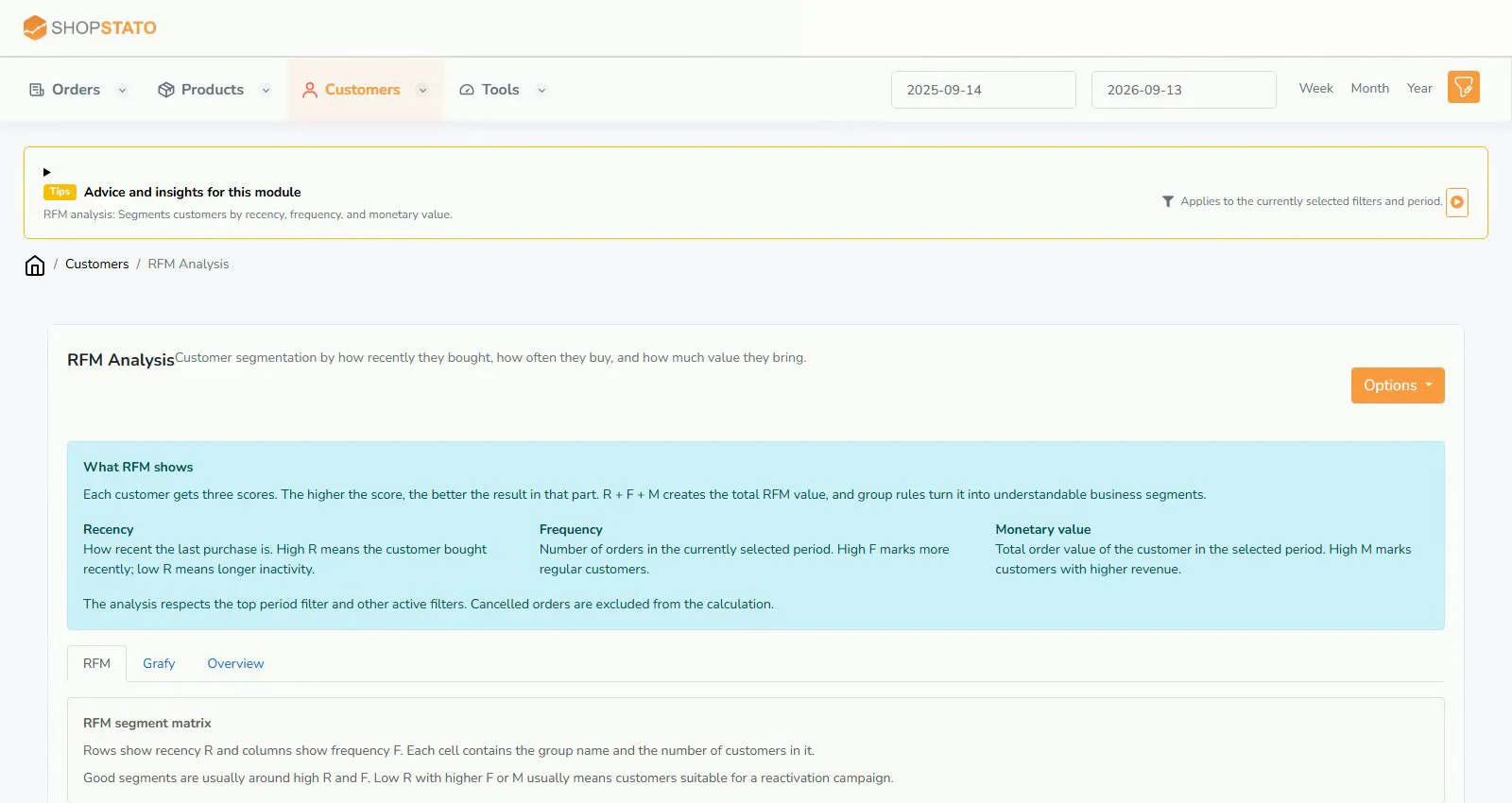
- Compare customers by their value and purchase count.
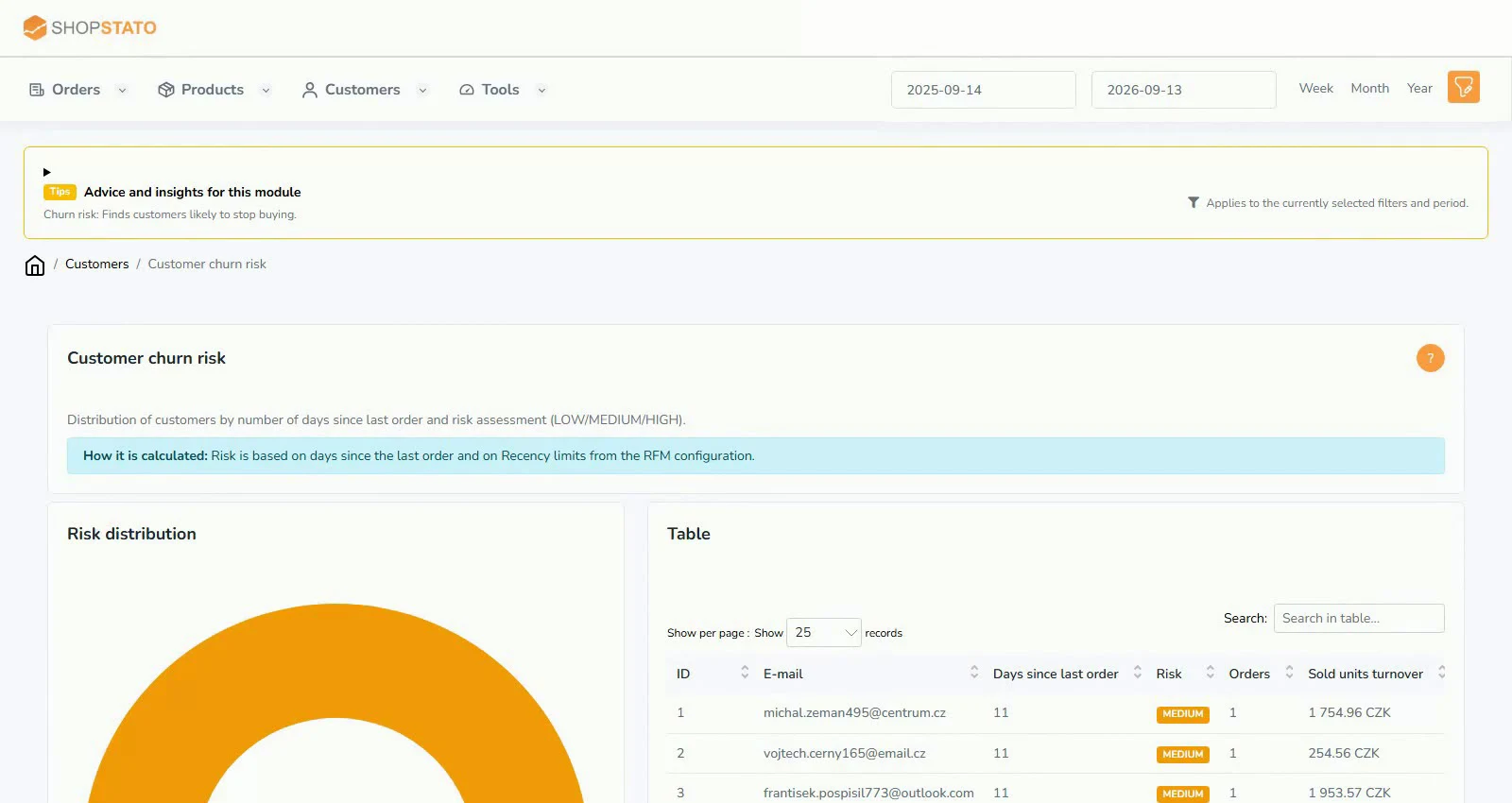
- Add time since the last purchase and the regularity of returns.
- Use RFM and churn risk to choose specific follow-up actions.
An example from the application
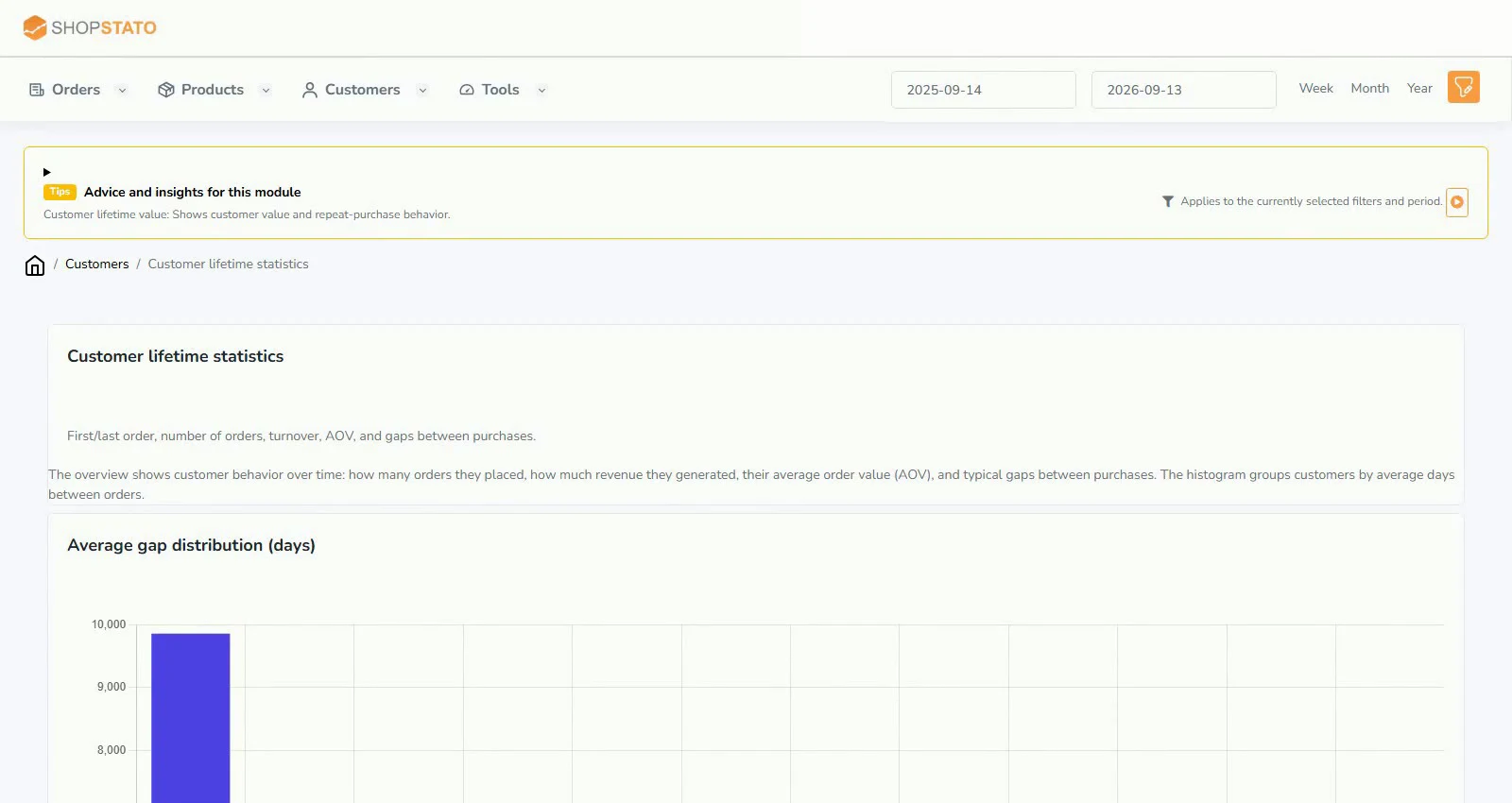 Enlarge screenshot ↗
What to consider when interpreting the result
Customer relationship value is not automatically an advertising budget. Consider costs, margins and uncertainty about future purchases.
Continue in the application
Application links require sign-in. Access to a report depends on your permissions and the relevant module.
Source: Shopstato help centre . This English guide adds practical context and examples from English video tutorials.