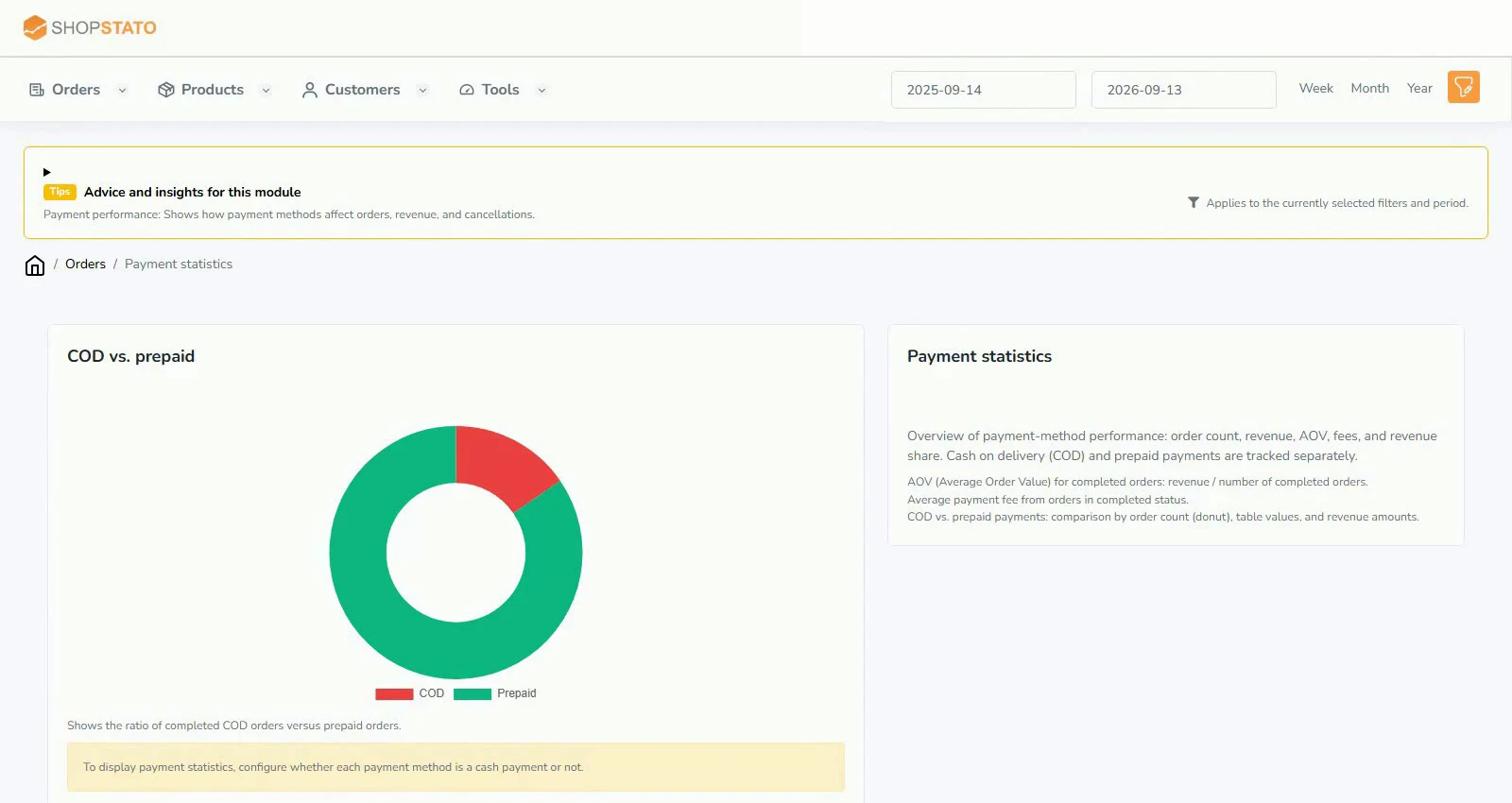
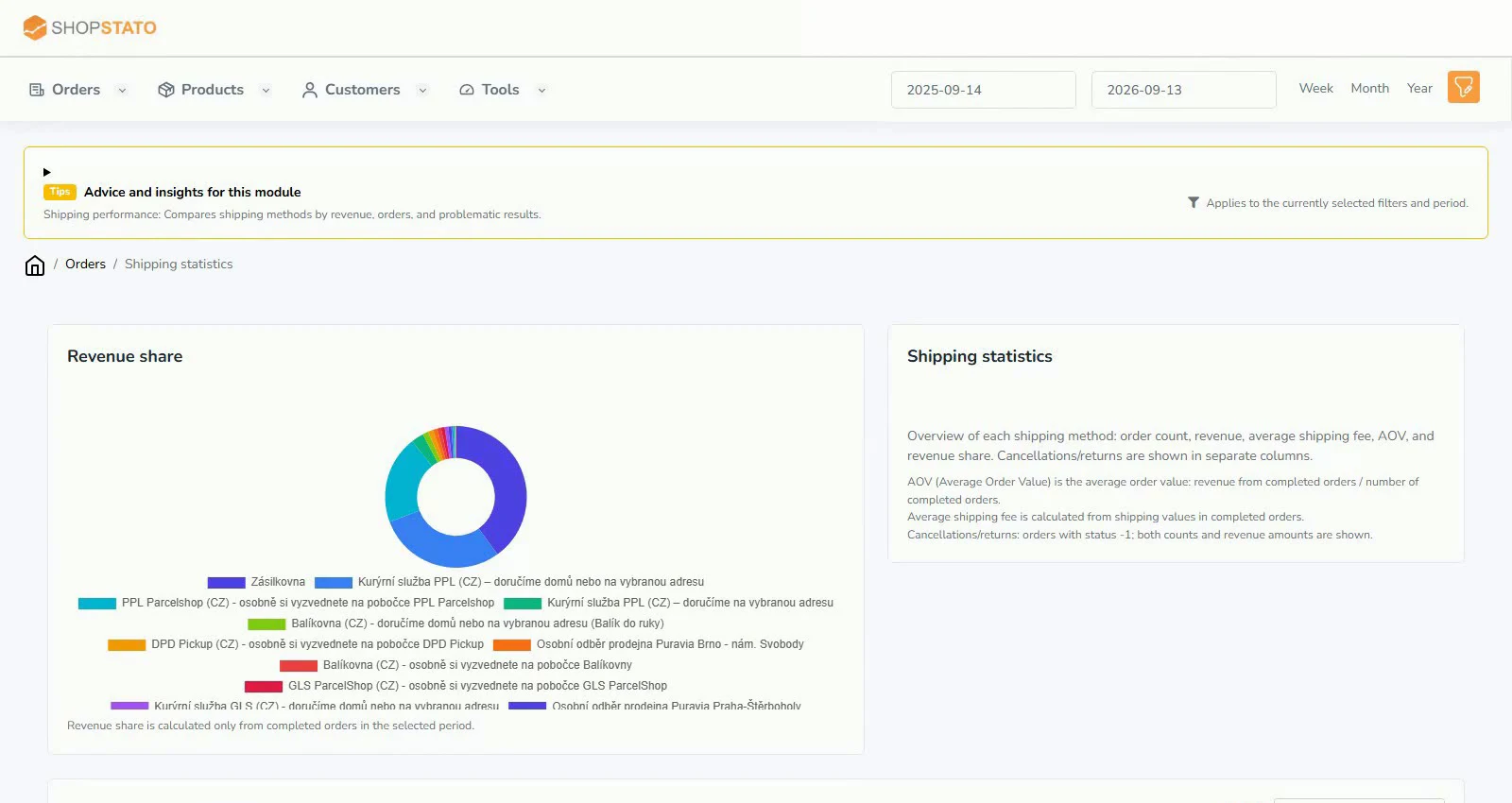
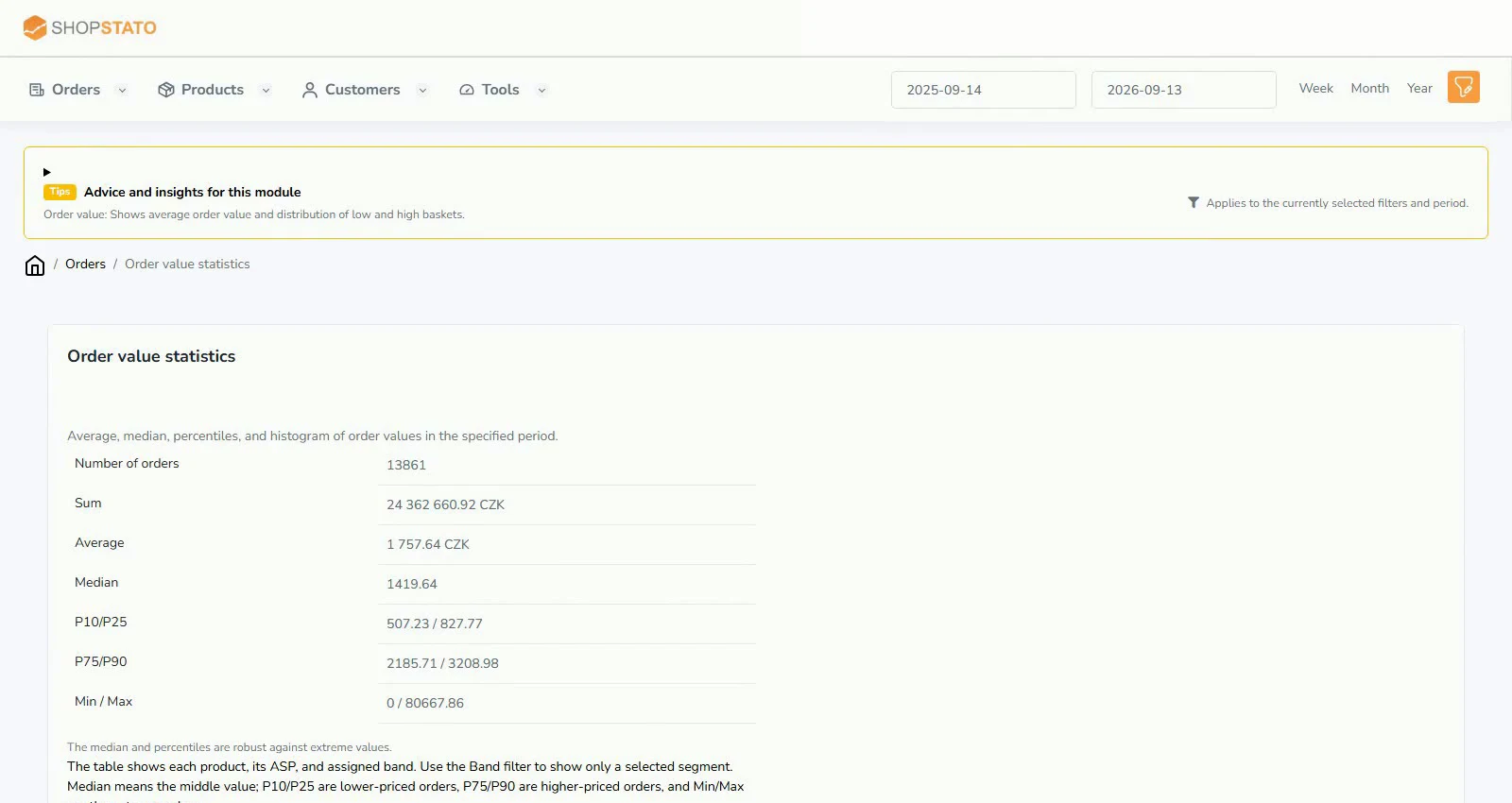
Do you know when your customers buy?
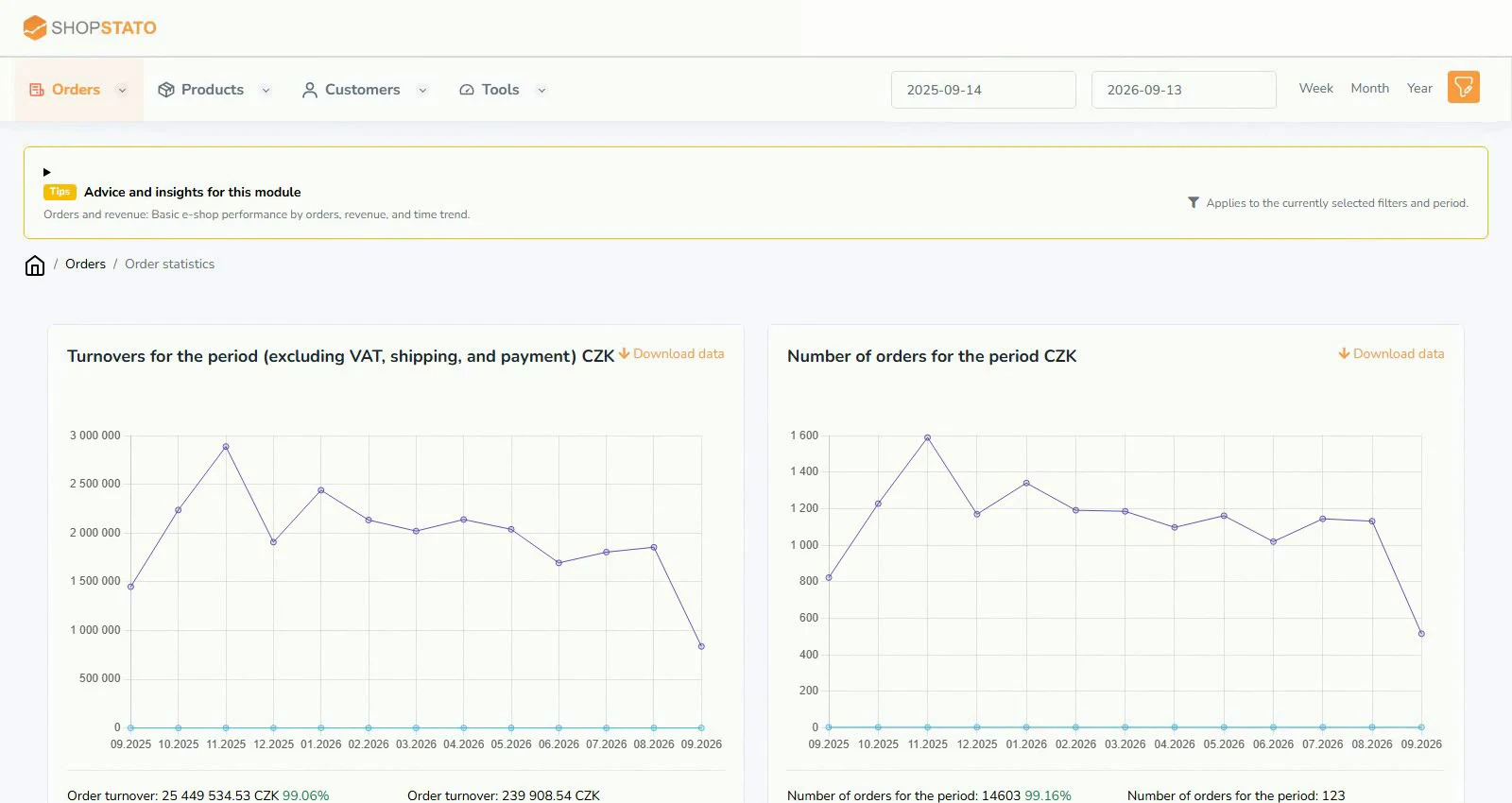
Knowing when customers place orders helps you plan more than a campaign. Your strongest days and busiest hours also tell you when people and dispatch capacity are needed.
Prepare staffing and temporary help before the peak arrives. Processing orders sooner can reduce dispatch delays and improve the shopping experience. Delivery speed can matter when a customer chooses between stores, but your own order history is a better planning guide than assumptions about a typical shopping day.
Start with actual orders
Traffic analytics can help describe activity before checkout. Shopstato works with imported orders and their statuses, giving you a view of what happened after a purchase. Choose which statuses belong in your comparison and exclude cancellations when you want to understand completed business.
You can also deliberately select cancelled orders. Compare their timing with normal orders to investigate whether a busy day or a processing delay coincides with a higher cancellation share.
Turn the pattern into a plan
A timing pattern does not establish the cause of a cancellation. Check the affected orders, delivery promises, availability and operational workload before drawing a conclusion.
- Choose a representative period with enough orders.
- Review the strongest days and hours using consistent statuses.
- Compare the pattern with your staffing and carrier collection times.
- Make a practical adjustment and review the next comparable period.
A clear picture of actual purchasing is a useful first step towards better capacity planning and more reliable dispatch.