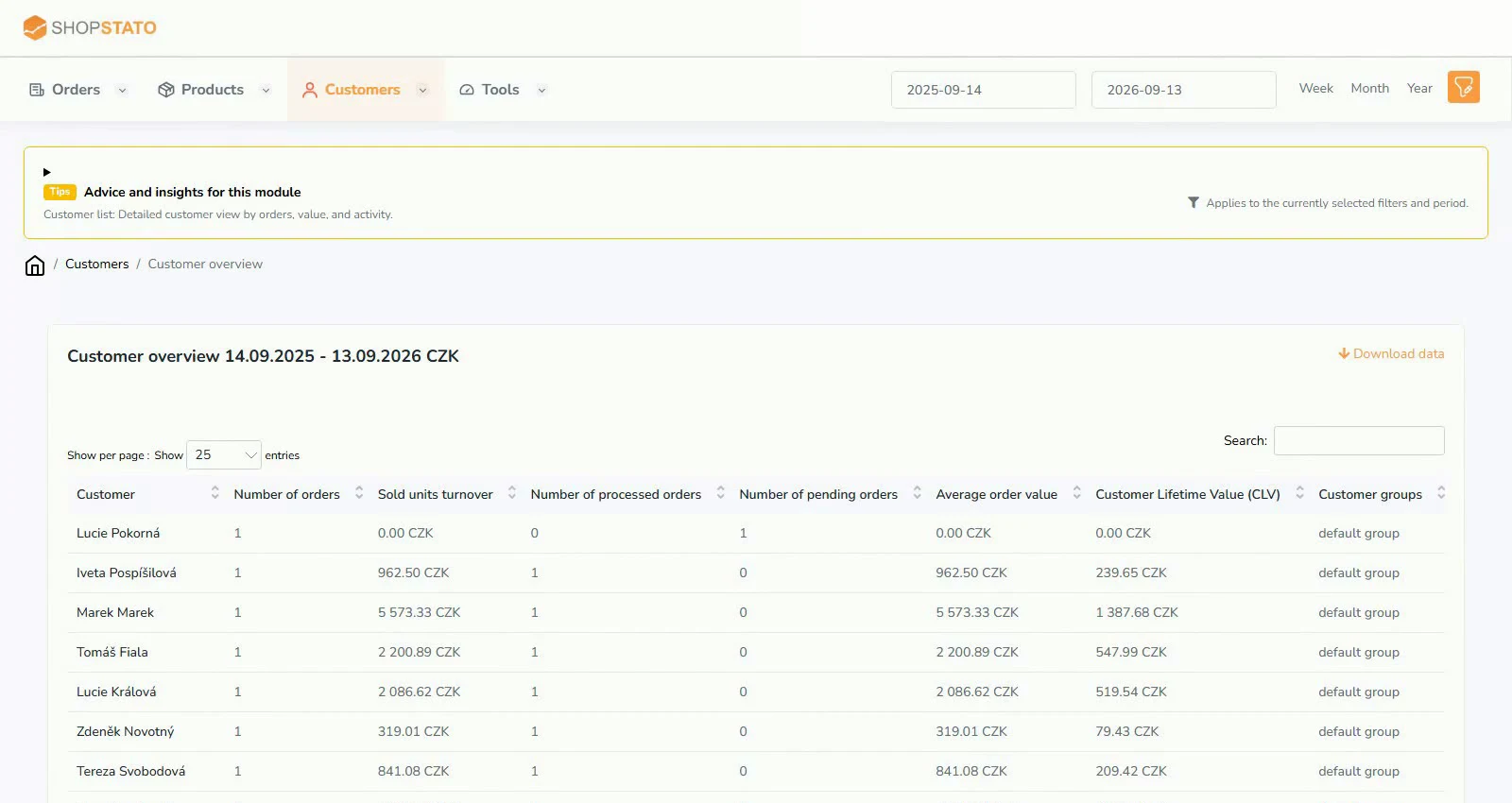
Understand customer value with CLV
Marketing tools make it possible to reach more people, but they also intensify competition. Looking after existing customers gives you another way to develop your store.
Satisfied customers have experience with your service and may recommend it to others. Understanding their value helps you plan care, compare acquisition spending and choose relevant customer groups.
What does customer value mean?
CLV is more than a sum of previous baskets. Different models use different assumptions about purchase frequency, margins and the length of the customer relationship.
The original Shopstato article describes an annual view using spending, average purchases per customer and average margin, with VAT and delivery costs excluded from the relevant net turnover. Treat model assumptions as part of the result rather than as a promise of future purchases.
Check the inputs
Review the average margin percentage in store settings and the availability of the CLV module. Accurate history and consistent customer identification matter: duplicate identities and missing orders can change the picture.
Turn value into a practical action
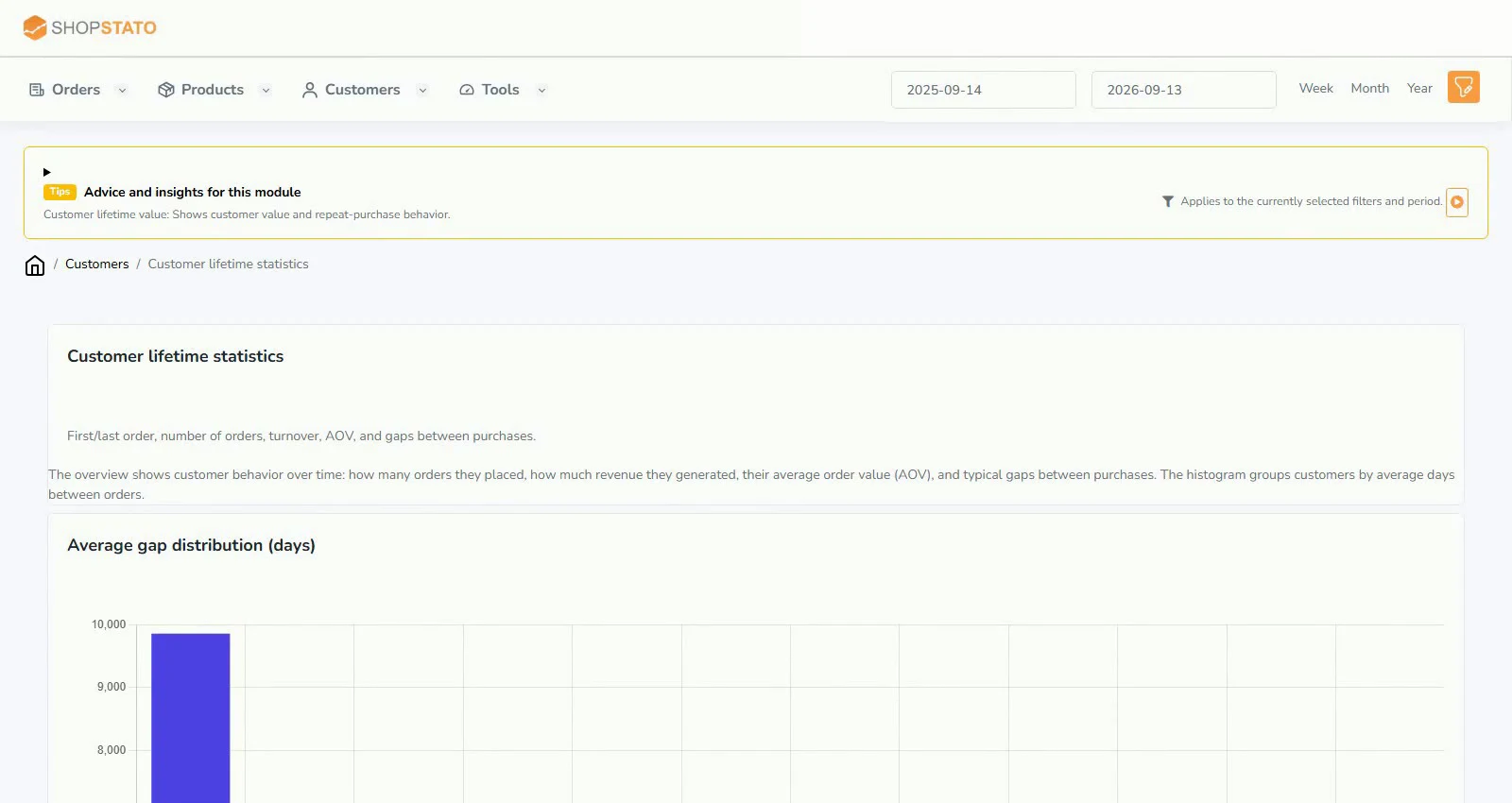
Compare valuable active customers with people who used to buy regularly and have become inactive. RFM and churn risk add the recency that a historical value alone cannot provide.
Do not spend the entire displayed value on acquisition. Consider costs, desired profit and uncertainty before choosing a budget. Read the CLV guide for a practical review.